Flowtime vs. The 52/17 Rule: Battle of the Adaptive Methods
The 52/17 Rule is often presented as a smarter alternative to Pomodoro: longer work blocks, longer breaks, fewer interruptions. But how does it compare to Flowtime? Both methods move beyond 25-minute ...
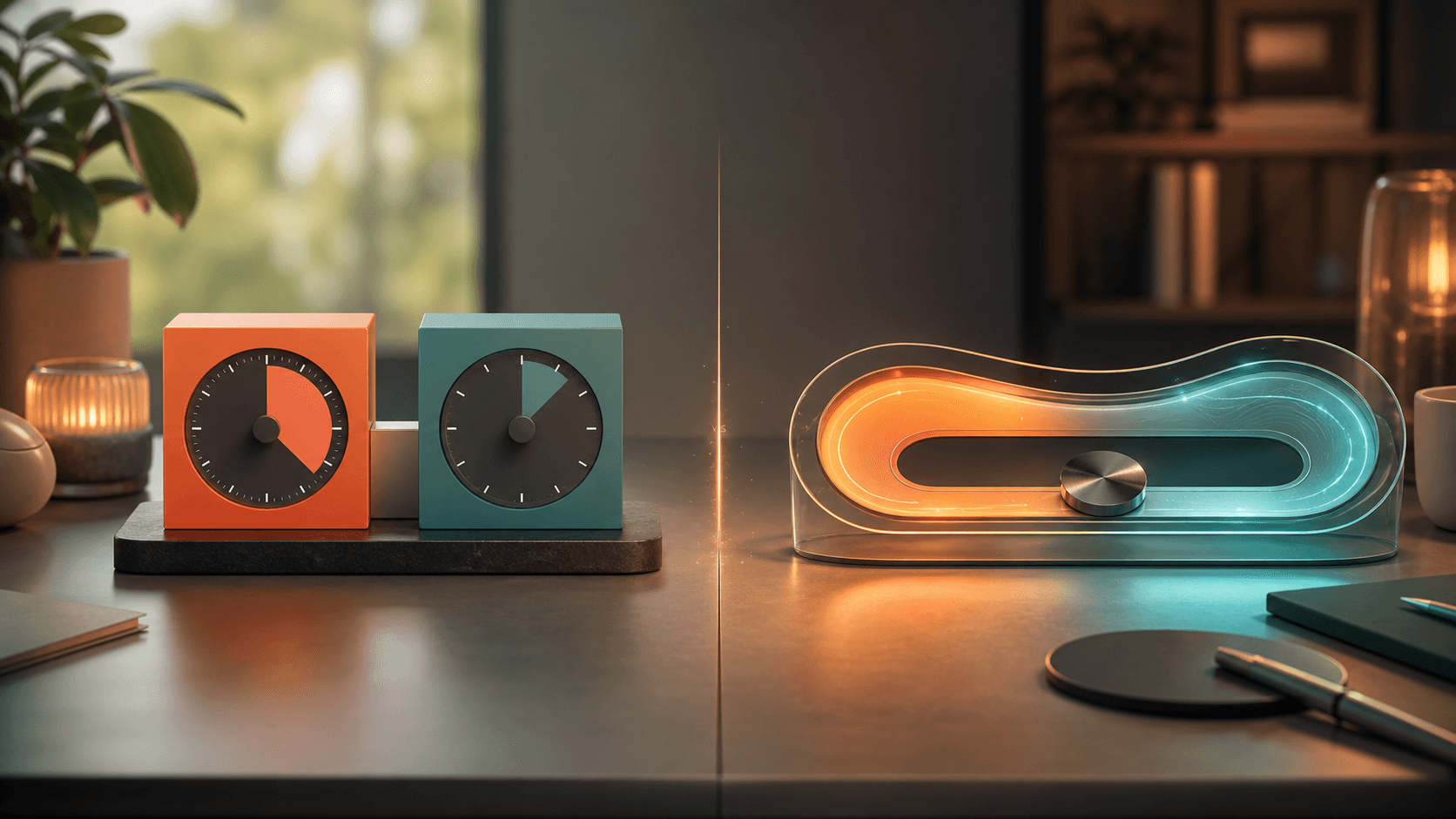
The 52/17 Rule is often presented as a smarter alternative to Pomodoro: longer work blocks, longer breaks, fewer interruptions. But how does it compare to Flowtime? Both methods move beyond 25-minute sprints, but they solve different problems.
What Is the 52/17 Rule?
The 52/17 Rule comes from DeskTime's analysis of work patterns among highly productive users. The simplified takeaway: some people do well with about 52 minutes of work followed by about 17 minutes of break. It is still a fixed rhythm, but a longer and more forgiving one than Pomodoro.
What Is Flowtime?
Flowtime is adaptive at the session level. You work until the task reaches a natural stopping point, your focus drops, or your max timer limit steps in. Then you rest in proportion to the work you actually did.
The Key Difference: Fixed Ratio vs. User-Driven
| Aspect | 52/17 Rule | Flowtime | |--------|-----------|----------| | Work length | Fixed at 52 minutes | Variable, user-decided | | Break length | Fixed at 17 minutes | Proportional to work time | | Interruptions | Forced at 52 min | Self-directed | | Flexibility | Low | High | | Data basis | Aggregate user data | Personal rhythm |
The 52/17 Rule is based on an aggregate pattern. Flowtime is based on your current task, energy, and history.
When 52/17 Works Better
The 52/17 Rule is ideal for:
- People who need structure but find Pomodoro too short
- Remote workers who want a clear rhythm to their day
- Teams who want synchronized break schedules
- Beginners transitioning from Pomodoro to something longer
When Flowtime Works Better
Flowtime is ideal for:
- Creative professionals whose work doesn't fit fixed intervals
- People with variable energy levels throughout the day
- Complex task workers who can't afford interruptions
- Data-driven users who want to optimize their personal rhythm
The Personality Factor
Your ideal method depends on your personality:
Disciplined planners tend to prefer 52/17. They like knowing exactly when breaks will happen and can plan their work accordingly.
Intuitive workers tend to prefer Flowtime. They trust their body signals and find fixed timers constraining.
Hybrid personalities might use 52/17 for admin tasks and Flowtime for creative work. There's no rule that says you must choose one.
Testing Both Methods
The best way to decide is to test both. Here's a 2-week experiment:
Week 1: Use the 52/17 Rule exclusively. Track your productivity, energy, and satisfaction.
Week 2: Use Flowtime exclusively. Track the same metrics.
Compare:
- Total focus time per day
- Number of tasks completed
- Self-reported energy levels (1-10 at end of day)
- Number of times you felt interrupted or frustrated
Flowtime's analytics dashboard makes this comparison easier because you can compare actual focus time, session length, completion rate, and task patterns instead of relying only on memory.
Can You Combine Them?
Yes. Here's a hybrid approach:
- Use 52/17 as your default for standard workdays
- Switch to Flowtime when you're doing deep work or creative tasks
- Use Flowtime's max timer limit of 52 minutes to enforce the 52/17 structure when you want it
- Use Flowtime's focus target of 52 minutes as a soft goal
This gives you the predictability of 52/17 with the flexibility of Flowtime.
The Data Behind 52/17
DeskTime's research is useful, but it has limitations:
- It reflects activity patterns, not necessarily cognitive focus
- It is based on aggregate behavior, not individual variation
- It does not tell you which interval is best for every task type
Flowtime's adaptive approach gives you a way to learn from your own sessions instead of treating one average interval as the answer for every kind of work.
The Verdict
The 52/17 Rule is a solid upgrade from Pomodoro. It's based on real data and works well for many people. But it's still a fixed system in a world of variable work.
Flowtime takes the next step: it removes fixed intervals entirely and lets the session length follow the work. For complex, creative, or unpredictable work, that flexibility matters.
Try both. Let your analytics decide. The best productivity method is the one that produces your best work — and only you can measure that.
Quick answers
What is the main takeaway from Flowtime vs. The 52/17 Rule: Battle of the Adaptive Methods?
The 52/17 Rule is often presented as a smarter alternative to Pomodoro: longer work blocks, longer breaks, fewer interruptions. But how does it compare to Flowtime? Both methods move beyond 25-minute .
How does this relate to Flowtime?
Flowtime helps you apply the idea with an adaptive timer, task tracking, proportional breaks, and analytics that show how your focus sessions actually behave.
Who should use this advice?
Use it if you do focused work, study sessions, creative work, remote work, or task-based work where fixed timers interrupt momentum.
Related Flowtime guides
flowtime timer settings
How to Use Flowtime: A Practical Guide to Timer Settings
Flowtime is not just a timer that counts down from a fixed number. It is a focus system built around how you actually work: choose a task, start a focus session, keep going while you are in flow, and ...
flowtime vs pomodoro
Flowtime vs. Pomodoro: Which Productivity Method Is Right for You?
The Pomodoro Technique has been the gold standard of productivity timers for decades. But as work has shifted toward more creative and complex tasks, a new challenger has emerged: the Flowtime Techniq...
how to use flowtime timer
How to Use the Flowtime Timer: A Step-by-Step Tutorial
Ready to start your first Flowtime session? This tutorial shows you how to use Flowtime as an actual timer system: choosing a task, setting useful targets, working without forced interruptions, taking...