Flowtime for Writers and Content Creators
Writing is rarely one uniform task. Research, drafting, editing, and publishing each ask for a different kind of attention. Flowtime works well for writers because the timer can adapt to the phase you...
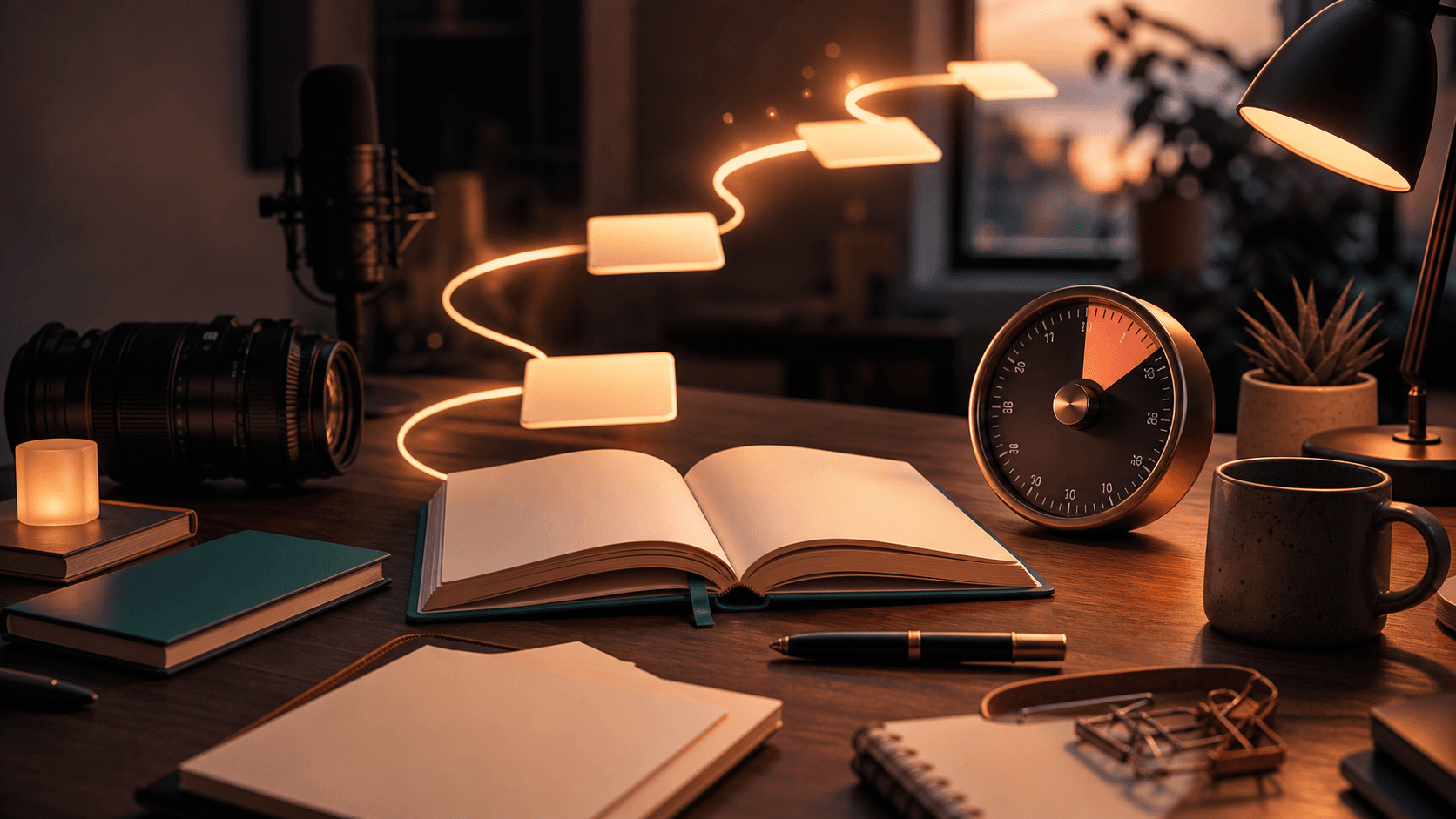
Writing is rarely one uniform task. Research, drafting, editing, and publishing each ask for a different kind of attention. Flowtime works well for writers because the timer can adapt to the phase you are in instead of forcing every session into the same shape.
The Three Phases of Writing
Every piece of content goes through three distinct phases, each with its own cognitive demands:
1. Research and Ideation
This is exploratory work. You're gathering information, reading sources, making connections, and letting ideas percolate. It requires open, diffuse attention — not laser focus.
Flowtime approach: Use short sessions (15-25 minutes) with frequent breaks. Don't force long blocks. Let your mind wander productively.
2. Drafting
This is where ideas become sentences. You're translating thoughts into words, building arguments, and creating structure. It requires deep, sustained concentration. Interruptions here are expensive because they break the thread you were following.
Flowtime approach: Use long sessions (45-90 minutes) with minimal breaks. Protect this time fiercely. Set a high max focus time limit and let yourself ride the wave.
3. Editing and Refinement
This is analytical work. You're evaluating what you've written, cutting fluff, improving clarity, and polishing prose. It requires critical attention but in shorter bursts.
Flowtime approach: Use medium sessions (25-45 minutes) with standard breaks. Switch between editing and other tasks to maintain freshness.
Why Pomodoro Fails Writers
The Pomodoro Technique treats each work block the same. But writing phases are different. A 25-minute block might be perfect for editing and too short for drafting. If the timer interrupts your drafting flow, you may lose more than the current sentence. You can lose the emotional momentum that made the page feel possible.
Flowtime lets you match your timer to your phase. Drafting a chapter? Work for 70 minutes. Editing a paragraph? Work for 20. The same tool, different configurations.
Tracking Writing Streaks
Consistency is the writer's greatest challenge. Flowtime's streak tracking helps you build a daily writing habit without the pressure of word counts or page targets.
How to use it:
- Set a minimum daily focus target (e.g., 30 minutes of writing)
- Complete one writing session per day
- Watch your streak grow
- If you break it, restart the next day without guilt
Unlike word-count goals, time-based goals are achievable even on bad days. Thirty minutes of struggling is still thirty minutes of work. It counts.
Combining Flowtime with Word Counts
Some writers love word counts. Others hate them. Flowtime works with both approaches:
For word-count writers: Track your words per minute using Flowtime's session data. If you write 500 words in a 40-minute session, your rate is 12.5 WPM. Use this to estimate how long future pieces will take.
For time-based writers: Let Flowtime handle the tracking. Focus on showing up, not on output volume. Over time, you can compare focus time with output and learn what kind of writing sessions produce your best work.
The Flowtime Writing Routine
Here's a sample day for a content creator using Flowtime:
| Time | Phase | Flowtime Session | |------|-------|-----------------| | 8:00-8:25 | Research | 20-min session, 4-min break | | 8:30-9:30 | Drafting | 55-min session, 11-min break | | 9:45-10:15 | Drafting | 25-min session, 5-min break | | 10:30-11:00 | Editing | 25-min session, 5-min break | | 11:10-11:40 | Editing | 25-min session, 5-min break | | 1:00-2:00 | Drafting | 55-min session, 11-min break |
Total: 5 hours of focused writing, 41 minutes of breaks, and no forced interruption in the middle of a drafting wave.
The Mental Health Angle
Writing is emotionally taxing. Rejection, imposter syndrome, and creative blocks are real. Flowtime helps by:
- Removing judgment: You're tracking time, not quality. Bad writing days still count.
- Building evidence: Your analytics show you are productive, even when it doesn't feel like it.
- Creating structure: A daily Flowtime session gives you a container for your work, reducing anxiety about "when" to write.
For Content Creators Specifically
Bloggers, YouTubers, podcasters, and social media creators face unique challenges:
- Multiple formats: Writing scripts, filming, editing, promoting
- Platform demands: Consistent posting schedules
- Creative burnout: The pressure to constantly produce
Flowtime helps by tracking time across all these activities. See exactly how much time you spend creating vs. promoting vs. admin. Adjust your balance based on data, not guilt.
Final Thought for Writers
The blank page is intimidating. The timer shouldn't be. Flowtime gives you a gentle structure that adapts to your creative process, not a rigid box that fights it. Set your session, start writing, and let the words flow — on your terms, on your timeline.
Quick answers
What is the main takeaway from Flowtime for Writers and Content Creators?
Writing is rarely one uniform task. Research, drafting, editing, and publishing each ask for a different kind of attention. Flowtime works well for writers because the timer can adapt to the phase you.
How does this relate to Flowtime?
Flowtime helps you apply the idea with an adaptive timer, task tracking, proportional breaks, and analytics that show how your focus sessions actually behave.
Who should use this advice?
Use it if you do focused work, study sessions, creative work, remote work, or task-based work where fixed timers interrupt momentum.
Related Flowtime guides
flowtime timer settings
How to Use Flowtime: A Practical Guide to Timer Settings
Flowtime is not just a timer that counts down from a fixed number. It is a focus system built around how you actually work: choose a task, start a focus session, keep going while you are in flow, and ...
flowtime vs pomodoro
Flowtime vs. Pomodoro: Which Productivity Method Is Right for You?
The Pomodoro Technique has been the gold standard of productivity timers for decades. But as work has shifted toward more creative and complex tasks, a new challenger has emerged: the Flowtime Techniq...
how to use flowtime timer
How to Use the Flowtime Timer: A Step-by-Step Tutorial
Ready to start your first Flowtime session? This tutorial shows you how to use Flowtime as an actual timer system: choosing a task, setting useful targets, working without forced interruptions, taking...